

_edited.jpg)
PROGRAMS
Learning that meets every child where they are.
Thoughtful, hands-on programs designed by experienced educators to nurture the whole child — mind, body, and heart.
OUR PROGRAMS
Programs Designed for Every Stage of Learning
At Little Ones Daycare, we provide age-appropriate programs designed to nurture children's cognitive, social, emotional, physical, and language development.During the first year of life, children experience tremendous growth and development
Infant Program (6 Weeks–12 Months)
The first year of life is one of the most important periods of brain development. During this time, infants form millions of neural connections through responsive caregiving, sensory experiences, language exposure, movement, and secure relationships. Our Infant Program is designed to provide a nurturing environment where children feel safe, supported, and encouraged to explore the world around them.
Teachers engage infants through individualized interactions, sensory exploration, music, movement, books, and language-rich experiences that promote cognitive, social-emotional, physical, and language development. Every routine, from feeding to story time, becomes an opportunity for learning and connection
Early Language & Communication
Sensory Processing & Exploration
Social-Emotional Security
Cognitive Development
Fine & Gross Motor Development
Music & Movement
Early Literacy Foundations

Learning Experiences
Infants participate in daily sensory exploration, interactive story experiences, music and movement activities, tummy time, mirror play, object exploration, and responsive communication. Teachers intentionally introduce language through songs, conversations, books, and verbal interaction, helping children develop listening skills, emotional security, curiosity, and a strong foundation for future learning.
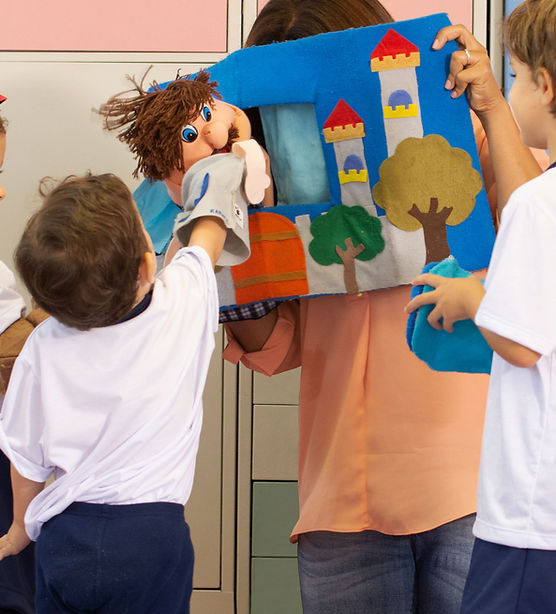
Learning Experiences
Toddlers participate in daily story time, language-building activities, music and movement, sensory play, art exploration, outdoor learning, and interactive group experiences. Children begin exploring colors, shapes, numbers, patterns, and simple problem-solving concepts while developing communication skills, self-confidence, and positive social relationships.
Toddler Program (12–24 Months)
Toddlers are active explorers who learn by moving, touching, experimenting, and interacting with the world around them. During this stage, children experience significant growth in language, independence, problem-solving, and social awareness. Our Toddler Program provides opportunities for children to investigate their environment while developing confidence, communication skills, and self-help abilities.
Teachers create engaging learning experiences that support curiosity, encourage exploration, and foster independence through play-based learning and guided discovery.
Language & Vocabulary Development
Social Skills & Emotional Growth
Sensory Exploration
Fine & Gross Motor Skills
Music & Movement
Early Literacy Foundations
Independence & Self-Help Skills
Twos Program (2–3 Years)
Children in the Twos Program begin transitioning from exploration-based learning to more intentional learning experiences. This stage is characterized by rapid language growth, increased independence, emerging problem-solving skills, and a growing interest in academic concepts. Our curriculum encourages children to investigate, communicate, create, and build foundational learning skills through meaningful play and guided instruction.
Early Reading & Language Development
Vocabulary Expansion
Early Writing Readiness
Number Recognition & Counting
Shapes, Colors & Patterns
Science Exploration
Social-Emotional Learning
Music, Art & Creative Expression
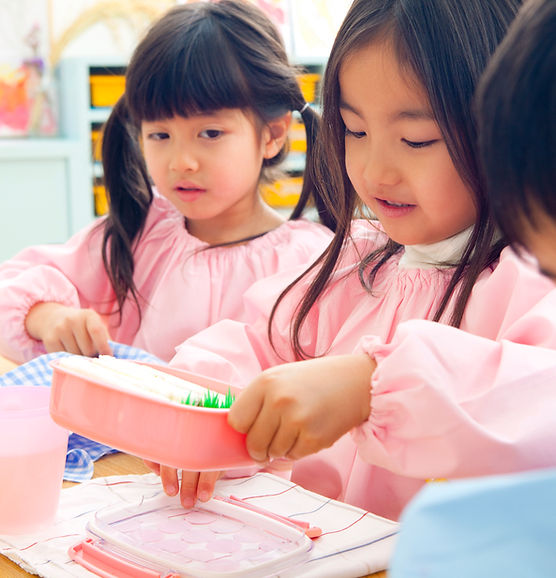
Learning Experiences
Children participate in daily circle time, literacy activities, storytelling, vocabulary development, pre-writing experiences, counting games, science investigations, music, art, and dramatic play. Teachers introduce letters, sounds, numbers, sequencing, and problem-solving through hands-on learning experiences that support both academic and developmental growth
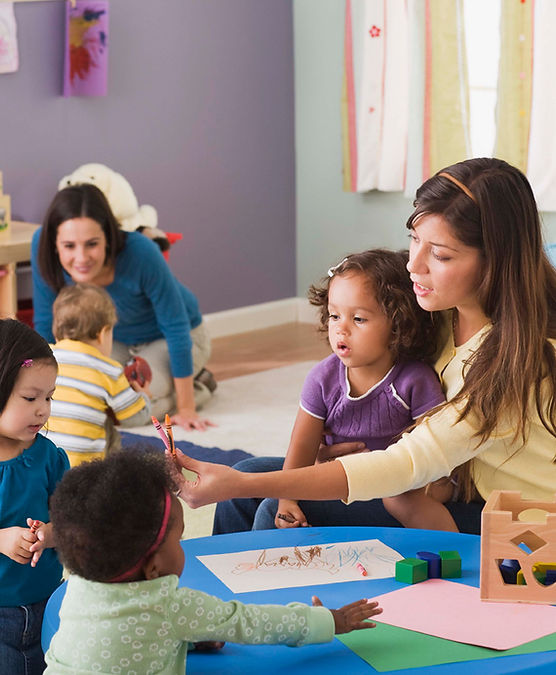
Learning Experiences
Children participate in daily reading instruction, phonics activities, handwriting practice, vocabulary development, mathematics lessons, STEM investigations, science experiments, dramatic play, art exploration, and collaborative learning experiences. Through small-group instruction and hands-on projects, children develop the academic and social foundations necessary for kindergarten readiness.
Preschool Program (3–4 Years)
Our Preschool Program introduces children to a structured early learning curriculum that promotes school readiness while maintaining the joy of exploration and discovery. Children begin developing stronger literacy, writing, mathematics, science, and critical-thinking skills through purposeful instruction and engaging learning experiences.
Teachers intentionally design activities that strengthen academic skills while supporting creativity, collaboration, communication, and independence.
Reading & Literacy Development
Writing & Handwriting Readiness
English Language Development
Mathematics & Critical Thinking
Science & Discovery
STEM Exploration
Social-Emotional Development
Creative Arts & Self-Expression
Music & Movement
Pre-K Program (4–5 Years)
Our Pre-K Program is designed to prepare children for a successful transition to kindergarten and future academic achievement. Children engage in a comprehensive curriculum that strengthens literacy, writing, mathematics, science, critical thinking, communication, and executive functioning skills. Learning experiences are intentionally designed to encourage independence, confidence, leadership, and a love of learning.
By combining academic instruction with inquiry-based learning and social-emotional development, we help children become capable, confident, and enthusiastic learners.
Reading, Writing & English Language Development
Mathematics & Problem Solving
STEM Exploration
Science & Discovery
Creative Arts & Self-Expression
Social-Emotional Development
Leadership & Independence
Critical Thinking Skills
Kindergarten Readiness
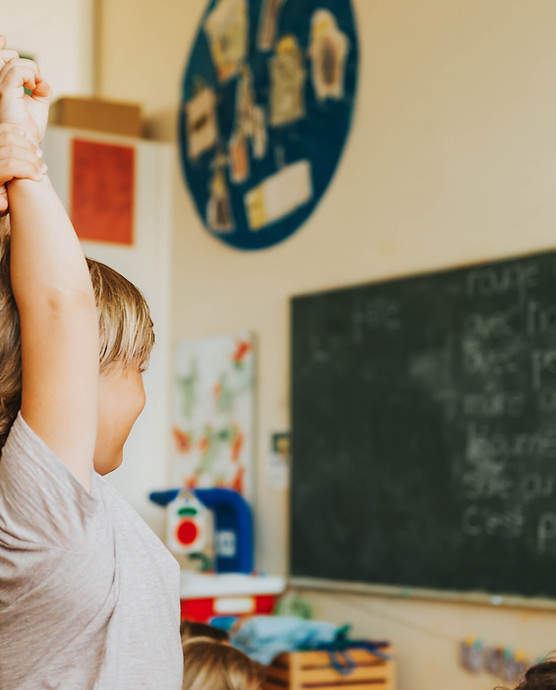
Learning Experiences
Children participate in guided reading, phonics instruction, handwriting practice, journal writing, mathematics lessons, STEM projects, science investigations, collaborative learning experiences, and leadership opportunities. Daily instruction helps children develop reading readiness, strong communication skills, mathematical reasoning, problem-solving abilities, and the confidence necessary to thrive in a kindergarten classroom and beyond.
Kindergarten Readiness Goals
Letter and sound recognition
Mathematical reasoning
Communication & leadership skills
Early reading skills
Problem-solving abilities
Writing readiness
Classroom independence
Learning Approach
Our curriculum is designed to support the whole child through hands-on learning, purposeful play, teacher-guided instruction, and meaningful experiences that prepare children for lifelong success.
Reading, Writing & English Language Development
Language development is a central part of our curriculum and is incorporated into every day. Children participate in story time, read-alouds, vocabulary building, phonics activities, letter recognition, listening comprehension, and guided conversations. As children grow, they begin practicing handwriting, tracing, journal writing, name recognition, sentence building, and early reading skills. Through daily exposure to language-rich experiences, children develop strong communication skills, confidence in self-expression, and a solid foundation for future academic success.
STEM Exploration
Our STEM curriculum introduces children to Science, Technology, Engineering, and Mathematics through exciting, hands-on experiences. Children participate in building challenges, engineering projects, simple coding activities, science experiments, problem-solving tasks, and investigations that encourage creativity and innovation. STEM learning helps children develop curiosity, critical thinking, teamwork, and the confidence to explore new ideas.
Creative Arts & Self-Expression
Creative expression plays an important role in child development. Children explore painting, drawing, sculpting, collage, dramatic arts, creative storytelling, and open-ended art projects. These activities encourage imagination, self-confidence, fine motor development, and problem-solving while allowing children to express their thoughts, feelings, and unique personalities. Every child is encouraged to create, explore, and celebrate their creativity.
Dramatic Play & Imagination
Dramatic play encourages children to use their imagination while developing language, social, and problem-solving skills. Through pretend play, role-playing, dress-up activities, puppet theaters, and themed learning centers, children learn cooperation, communication, empathy, and creativity. Dramatic play helps children make sense of the world around them while building confidence and independence.
Sensory Exploration
Sensory learning experiences help children explore and understand their world through touch, sight, sound, smell, and movement. Activities may include sensory bins, water play, sand exploration, textured materials, nature experiences, and hands-on investigations. Sensory exploration supports brain development, language growth, fine motor skills, problem-solving abilities, and creativity while encouraging curiosity and discovery.
Kindergarten Readiness
Our Kindergarten Readiness program prepares children for a successful transition into elementary school. Children build foundational skills in reading, writing, mathematics, science, problem-solving, and social-emotional development through structured learning experiences and teacher-guided instruction. By the time children leave our program, they are developing the confidence, independence, focus, and academic skills needed to thrive in kindergarten.
Mathematics & Critical Thinking
Mathematics is introduced through hands-on learning experiences that encourage children to explore numbers and problem-solving in meaningful ways. Children participate in counting activities, number recognition, sorting, matching, patterning, measuring, sequencing, graphing, and simple addition concepts. Teachers encourage children to think critically, ask questions, compare objects, make predictions, and develop logical reasoning skills. These activities help children build confidence and prepare them for future mathematical learning.
Science & Discovery
Children are naturally curious about the world around them. Through science exploration, children investigate nature, weather, seasons, plants, animals, life cycles, healthy habits, and environmental awareness. They engage in observation, experimentation, prediction, and discovery activities that encourage inquiry and exploration. These experiences help children develop analytical thinking skills while fostering a lifelong love of learning.
Music & Movement
Music and movement are integrated throughout the day to support cognitive, physical, and social development. Children participate in singing, dancing, rhythm activities, instrument exploration, movement games, and creative expression through music. These experiences strengthen coordination, listening skills, memory, language development, and self-confidence while making learning fun and engaging.
Social-Emotional Development
Social-emotional learning is woven throughout our daily curriculum. Children learn how to identify emotions, build positive relationships, practice kindness, develop empathy, manage feelings, and solve conflicts appropriately. Through teacher guidance, classroom discussions, cooperative activities, and group experiences, children develop self-confidence, resilience, self-regulation, and the interpersonal skills needed for success in school and beyond.
Physical Development & Active Play
Physical activity is an important part of healthy child development. Children participate in outdoor play, obstacle courses, movement activities, playground experiences, balance challenges, and age-appropriate games that strengthen coordination, balance, strength, and motor skills. Active play also promotes healthy habits, teamwork, confidence, and overall well-being.
Family Partnerships
We believe families are a child’s first and most important teachers. Strong communication and collaboration between home and school help create the best learning environment for every child. Families receive regular updates on their child’s development, classroom activities, milestones, and learning progress. Together, we work to support each child’s growth, confidence, and success both inside and outside the classroom.